Proposals
How to Propose to Your Girlfriend: A Step-by-Step Guide
From choosing the ring to saying the words, everything you need to plan a proposal that genuinely reflects your relationship — not just a trending moment.
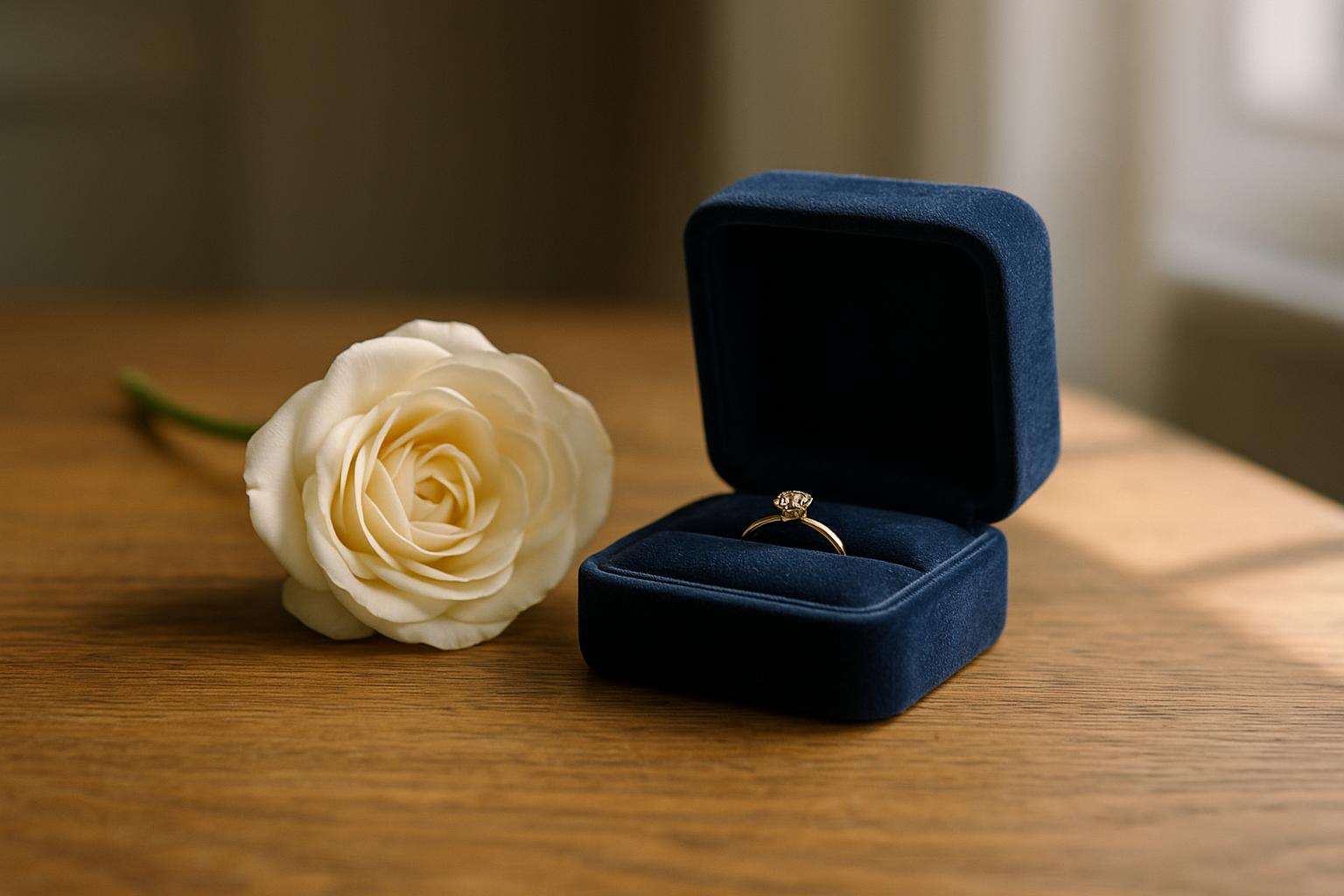
A well-planned proposal has three distinct phases: confirming readiness through honest conversation, choosing a ring she will love, and designing a moment that reflects who you both are. The data is clear that personalization outranks production value — the most memorable proposals are the ones that demonstrate genuine knowledge of your partner, not the biggest budget or the most elaborate staging.
How Do You Know You're Ready to Propose?
Readiness for a proposal is not a feeling that arrives fully formed. It is a conclusion you reach by working through a specific set of conversations — about money, children, values, and how you both make big decisions. According to The Knot's 2026 Real Weddings Study, which surveyed 10,474 U.S. couples married in 2025, 57% of couples had been discussing marriage or a potential engagement for at least a year before the proposal actually took place. The proposal itself was the formal declaration of a decision already in progress — not a cold question asked in the dark.
Before you begin planning any logistics, confirm that you and your partner have discussed the following substantively (not hypothetically):
- Marriage timeline: Do you both see marriage as something that is happening in the near term, or is one of you still treating it as distant?
- Children: Whether and when. This is not a conversation to defer to "after we're engaged."
- Finances: General awareness of each other's debt, savings, and financial approach. You do not need identical habits, but you need compatible ones.
- Living situation: Where you will live after marriage — particularly if careers, family proximity, or housing costs create genuine competing pulls.
- Values and religion: How you will handle any meaningful differences in how you each approach faith, family obligations, or life priorities.
If any of these conversations have been avoided rather than simply not yet reached, that is a signal to have them before the proposal — not after. The practical upside is not just relationship health; it is that a proposal made after these conversations have landed well is almost certain to be received with wholehearted joy rather than complicated ambivalence. For a fuller treatment, see our guide on whether you're ready to get engaged.
How Do You Choose the Right Ring?
The ring is not the proposal, but it is the object your partner will wear every day for the rest of her life — and she almost certainly has opinions about it, even if she has never expressed them directly. The Helzberg 2025 Engagement and Ring Shopping Survey found that 88% of those being proposed to had shared ring preferences with their partner in advance. That number is a strong argument for doing your research before you buy.
Understand Her Style Before You Shop
Spend a week paying attention to the jewelry she already wears. Is it yellow gold or white metal? Simple and architectural, or detailed with pavé and halos? Does she favor delicate bands or substantial ones? If she has a Pinterest board or has ever saved jewelry on Instagram, those are direct signals. A trusted friend who shops with her regularly is often the most efficient research asset you have.
The primary decisions you will need to make when buying an engagement ring:
| Decision | Common Options | What to Prioritize |
|---|---|---|
| Center stone | Natural diamond, lab-grown diamond, sapphire, moissanite, alternative gem | Her preference for natural vs lab-grown; stone durability if she is active |
| Stone shape | Round brilliant, oval, marquise, pear, emerald cut, cushion, princess | Her existing jewelry and the shapes she has reacted to positively |
| Setting style | Solitaire, halo, pavé band, three-stone, bezel, toi et moi | Whether she prefers minimal or ornate; lifestyle (bezel for active wearers) |
| Metal | Platinum, 18k or 14k white gold, yellow gold, rose gold | What she already wears; platinum for durability, yellow gold for warmth |
| Budget | Under $2K to $10K+ | Your actual financial situation, not a salary multiple; lab-grown stones offer more size per dollar |
Finding Her Ring Size Without Spoiling the Surprise
The average U.S. ring size for women is between a 6 and a 6.5, but buying to average and resizing afterward is the most reliable no-risk approach when you cannot measure directly. Resizing a plain metal band at most jewelers costs between $20 and $60 and takes one to three days. Borrowing a ring she already wears on her left ring finger and having a jeweler measure the inside diameter is the most accurate alternative. See our full guide on finding her ring size secretly for every method ranked by reliability.
Once you have a sense of her style, give yourself enough lead time: a ready-made ring from an online retailer typically ships in five to ten business days; a custom ring takes six to twelve weeks from design approval to finished piece. If your proposal date is fixed, work backward from that date with at least two weeks of buffer.
How Do You Plan the Proposal Itself?
Planning a proposal means making three distinct decisions: where, how, and what you will say. Each one deserves deliberate thought.
Step 1: Choose a Setting That Fits Your Partner — Not Just the Occasion
The single most consistent finding in engagement research is that the setting should reflect who your partner actually is, not simply what looks beautiful in a photograph. A Destify analysis of Reddit engagement stories (2020–2025) found that home proposals — specifically, proposals in the couple's shared domestic space — produced successful outcomes at a higher rate than any other single setting, including scenic outdoor locations. Home is not glamorous, but it is intimate, pressure-free, and deeply personal.
According to The Knot's data, scenic outdoor locations account for 34% of proposals, and spots with specific personal relationship significance account for another 17%. The unifying principle is not beauty but meaning: the location where you first said "I love you," a park you walk through every Sunday, the specific restaurant where your relationship shifted from casual to serious.
On the question of public versus private: the evidence is decisive. The Helzberg 2025 survey found 83% of people prefer a private proposal. Lisa Hoplock, Ph.D. of the University of Manitoba found that only 15% of women genuinely want a public proposal — and that public proposals are twice as likely to be rejected. A practical middle path that captures both intimacy and celebration: propose privately, then walk into a room where close family and friends are already assembled to celebrate.
Step 2: Decide Whether to Hire a Photographer (and How Much to Spend)
A proposal photographer — someone positioned discreetly nearby to capture the moment — is increasingly common but not mandatory. If your partner values candid, documentary-style imagery of important life moments, a hidden photographer is one of the highest-return additions to a proposal. If she tends to be self-conscious in front of cameras or strongly prefers private emotional moments, the presence of an unknown person recording the scene can feel like an intrusion.
Proposal photography pricing typically runs:
- $200–$400: Entry-level and newer photographers; typically one hour, 20–30 edited images.
- $400–$750: Mid-market; experienced proposal photographers with reliable hidden-shoot logistics.
- $750–$1,500+: Senior photographers in major metro markets; cinematic editing, rapid turnaround, full gallery.
Book at least four to six weeks ahead for domestic proposals; eight to twelve weeks for destination or international locations. Verify that any photographer you book in a national park holds a valid NPS commercial use authorization for that specific park — unauthorized commercial photography can result in fines and the forced end of your session.
Step 3: Prepare What You Will Say
The words spoken at a proposal are what people remember most. Not the location, not the ring, not whether there were rose petals. Every proposal planner, relationship researcher, and couples therapist who has studied the topic reaches the same conclusion: the most meaningful thing a proposer can do is demonstrate that they genuinely know who their partner is and why, specifically, they want to build a life with them.
A few principles for preparing your words:
- Be specific. "You're my best friend" is warm but generic. Name a particular quality, a specific moment, a way she has changed how you see the world. Specificity is what makes a speech feel written for her rather than rehearsed from a template.
- Write it out, at least once. You do not need to read from paper, but writing forces you to find the actual words rather than relying on vague feelings. Then practice saying it aloud until it feels natural.
- Keep it proportionate. Two to four sentences is enough for most people. A long speech that reaches the question only after several minutes can feel more performative than sincere.
- End with the actual question. "Will you marry me?" — not an implied question, not an assumption. Ask it directly.
Step 4: Handle the Logistics
Even simple proposals have logistical elements that can go wrong. A practical checklist:
- Ring secured and safely transported: A ring box in a jacket pocket is reliable; a ring box in a coat checked at a restaurant is a significant risk. Keep it on your person.
- Location confirmed: If proposing at a specific venue, restaurant, or park, confirm your reservation or access the day before. Weather backup plans are essential for any outdoor setting.
- Photography logistics communicated: If a photographer is hidden nearby, they need your exact route, the specific moment you plan to kneel, and a signal if the plan changes. A dry run or a very detailed briefing call prevents the photographer from positioning in the wrong spot.
- Family notifications staged: If you are involving parents or planning an immediate celebration, confirm that everyone knows the plan and — critically — that no one accidentally tips off your partner before the moment.
- Post-proposal plan: Have somewhere to go immediately after — a reservation at a meaningful restaurant, a bottle of champagne at home, a gathering of close friends. The moment after the "yes" deserves as much thought as the moment of the question.
Step 5: The Moment Itself
When the moment arrives, allow yourself to be present rather than performing. The nervousness is real and expected; your partner will likely be experiencing it too. Get down on one knee — it remains the dominant cultural signal in Western engagements, and it communicates unambiguously. Make eye contact. Speak your prepared words, or something close to them. Produce the ring. Ask the question. Then, when she says yes, let the moment be what it is before you reach for your phone.
What Happens Immediately After the Proposal?
The post-proposal hours are often underplanned. A few things worth thinking through in advance:
Telling your families: There is a generally accepted notification sequence — her immediate family first, then yours, then close friends, then broader social circles. Announcing on social media before key family members have heard directly is a common source of avoidable hurt feelings. Give yourselves at least a few hours of private celebration before the news becomes public.
Ring fit: If the ring does not fit perfectly, do not panic. Most jewelers size rings within five to ten business days, and many offer complimentary sizing within the first year. She can wear it on a different finger or on a chain until it is adjusted.
Insurance: A ring is a valuable item the moment it leaves the jeweler. Standard homeowners or renters insurance typically covers jewelry only up to $1,000–$2,500 without a rider. Standalone jewelry insurance through a company such as BriteCo or Jewelers Mutual covers loss, theft, and damage — including mysterious disappearance — from day one, usually for 1%–2% of the ring's appraised value annually. Get a GIA-graded ring appraised and insured before the ring has been on your partner's hand for more than a week. For a full comparison of coverage options, see the Owning & Protecting hub.
Enjoy it: The engagement period is brief by the standards of a lifetime. Before the planning conversations, the vendor decisions, and the guest-list negotiations begin, take a day to simply be engaged — just the two of you, the ring, and whatever that evening already had planned.
Frequently asked
How far in advance should I plan a proposal?
Most proposers spend between one and twelve months planning. Survey data from ApoteoSurprise (1,800 respondents) found that 34% plan for roughly two months and 40% plan for three to twelve months. Only 5% act within days of deciding. The practical minimum depends on whether you need to size a ring and order it (allow six to eight weeks for custom work), book a venue, hire a photographer, and involve family. If you want a proposal photographer, book at least four to six weeks out — good photographers fill their calendars quickly, especially in late fall and around Valentine's Day.
Should I ask her parents' permission before proposing?
Asking a parent's blessing is a tradition, not a requirement, and the right answer depends entirely on your partner and her family's expectations. In families where this ritual carries genuine meaning, skipping it can cause lasting friction. In others, it may feel outdated or even exclusionary — particularly if your partner has a complicated family relationship. The safest approach is to gauge how your partner talks about her family and their role in major life decisions. If you do ask a parent, frame it as seeking a blessing or their support rather than asking permission, which positions your partner as having full agency in her own decision. Keep the conversation brief and private, and do not let the parent's response — positive or equivocal — become an excuse to delay a proposal you're otherwise ready to make.
Is it better to propose in public or in private?
The data is unambiguous: most people strongly prefer a private proposal. The Helzberg 2025 Engagement and Ring Shopping Survey found 83% of respondents prefer a private setting, and University of Manitoba researcher Lisa Hoplock, Ph.D., found that only 15% of women genuinely want a public proposal — and that public proposals are twice as likely to be rejected as private ones. Unless you have clear, specific evidence that your partner wants to be proposed to in public, choose privacy. A middle path that works well: propose privately, then round a corner to a surprise gathering of close friends and family so the celebration is immediately shared.
How much should I spend on an engagement ring before proposing?
The old "three months' salary" rule is a marketing invention from the 1930s, not a financial guideline. According to The Knot's 2026 Real Weddings Study, the average spend on a lab-grown diamond center stone is $4,600 at an average of 1.9 carats; Helzberg's 2025 survey found average maximum ring budgets of $4,000 (mean $6,423). What you spend should be calibrated to your actual financial circumstances and your partner's expectations — not an arbitrary multiple of income. If you're unsure of her preferences, our relationship readiness guide covers the pre-proposal conversations that remove all guesswork. The Budget & Financing hub breaks down exactly what different price points buy.
What if she says no — or asks for more time?
A "not yet" or a hesitation is more common than most people discuss publicly, and it does not mean the relationship is over. If your partner asks for more time or expresses reservations, the most important thing you can do is receive that calmly and without defensiveness. Do not pressure her for an immediate answer or reframe her hesitation as a rejection. Have a private, honest conversation about where she is in her thinking — the pre-proposal discussions recommended in this guide (values, finances, timeline) are specifically designed to surface any misalignment before the moment, which dramatically reduces the likelihood of surprise. If a public proposal produces a hesitation, acknowledge it gracefully, give her a way out of the spotlight, and continue the conversation privately later.
Do I need a ring to propose, or can I propose and shop together afterward?
Both approaches are widely practiced and entirely valid. According to The Knot's 2026 Real Weddings Study, nearly 9 in 10 proposers propose with a ring already in hand. However, proposing with a placeholder ring — or with no ring at all, simply with the question and the intention — is increasingly accepted, especially among couples who plan to shop together for a stone that genuinely reflects her taste. The emotional core of a proposal is the question and the commitment, not the object. If you choose to shop together, use the proposal moment to establish the intention clearly, then frame the ring-shopping as a shared, joyful next step rather than an errand.
How do I find out her ring size without ruining the surprise?
There are several reliable methods that require no direct question. Borrow a ring she already wears on her ring finger and have a jeweler measure the interior diameter — most will do this for free. Trace the inside of the ring on paper or press it lightly into soap and bring that impression to a jeweler. You can also enlist a trusted friend or family member to ask casually during a conversation about jewelry. If none of those options are available, the average U.S. ring size for women is a 6 to 6.5 — ordering slightly large and having it resized after the proposal is a completely routine process at any reputable jeweler, typically costing $20 to $60. For more detail, see our guide on finding her ring size without her knowing.